What Is Snail Mucin? The Skincare Ingredient Explained Simply
Snail mucin is the filtered slime snails make to protect their skin. Here is what it contains, why it ended up in serums, and what it can realistically do for your face.
Key takeaways
- Snail mucin is the slime snails produce to keep their own skin moist and repair small injuries. On ingredient labels it is called snail secretion filtrate.
- It is mostly water, plus a mix of sugars and proteins (mucins), hyaluronic acid, allantoin, small amounts of glycolic acid, peptides and antioxidant enzymes.
- In skincare it works mainly as a hydrator and soother. Small human studies suggest modest help with fine lines and skin texture.
- It is not snail sperm, it is not a miracle, and it is generally gentle, but people with dust-mite or shellfish allergies should patch test first.
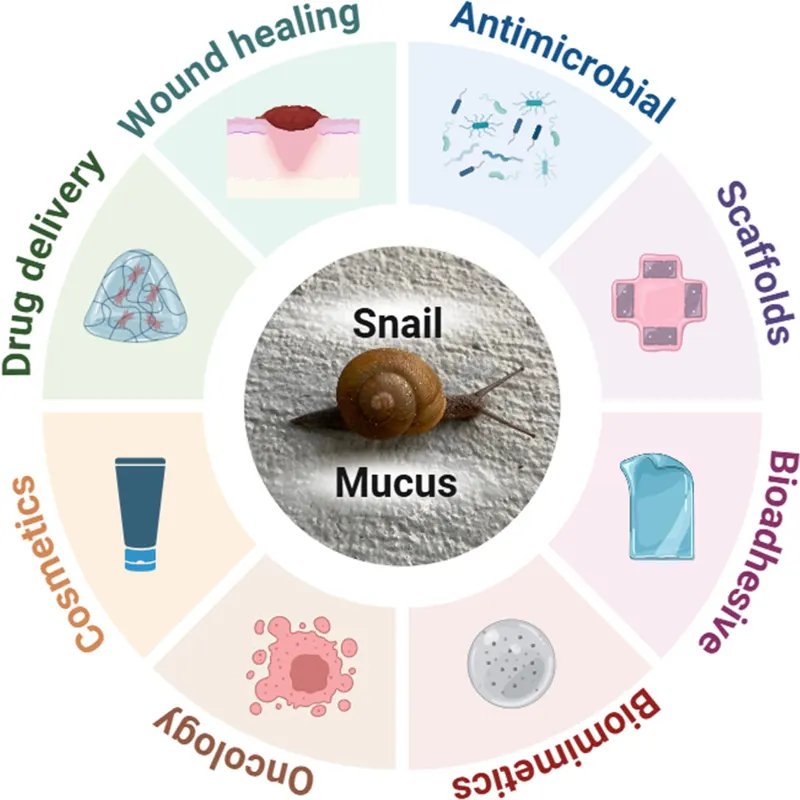
Snail mucin is the clear, stretchy slime that snails secrete to protect their bodies. Skincare companies collect it from farmed snails, filter and purify it, and add it to essences, serums and creams. On the back of the bottle you will see it listed as snail secretion filtrate.
It sounds strange, but the idea behind it is simple. A snail’s slime has to keep a soft, unprotected body moist, help it glide over rough surfaces without getting cut, and help small injuries heal. Those same jobs (holding water, forming a protective film, calming irritation) are exactly what most people want from a moisturizing skincare product.
Snail mucin is a protective slime that snails make for their own skin
Land snails produce several kinds of mucus. One helps them crawl, one is stickier and helps them cling to surfaces, and one coats the body when they are disturbed or injured. Cosmetic snail mucin is a blend of these secretions, collected and then filtered.
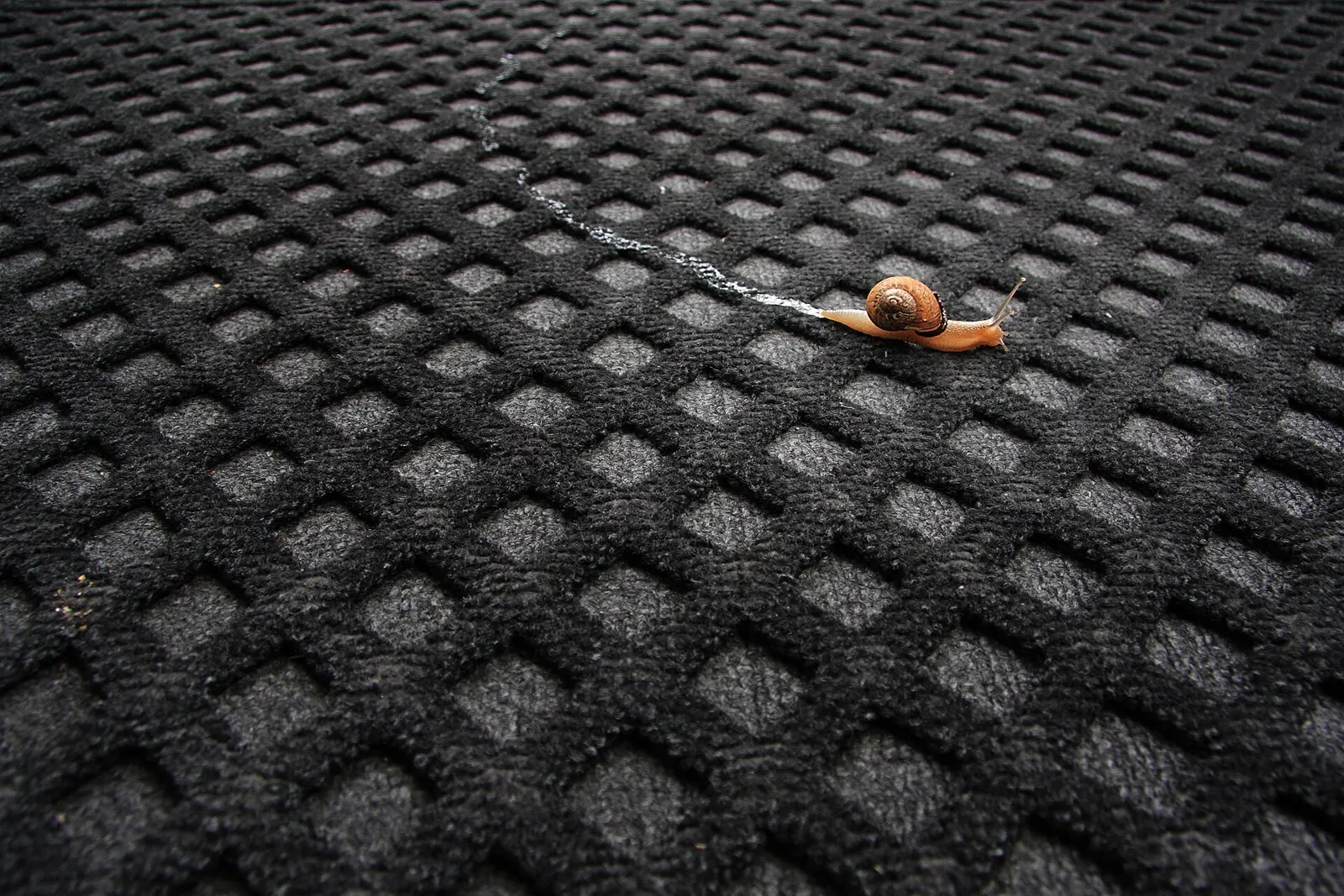
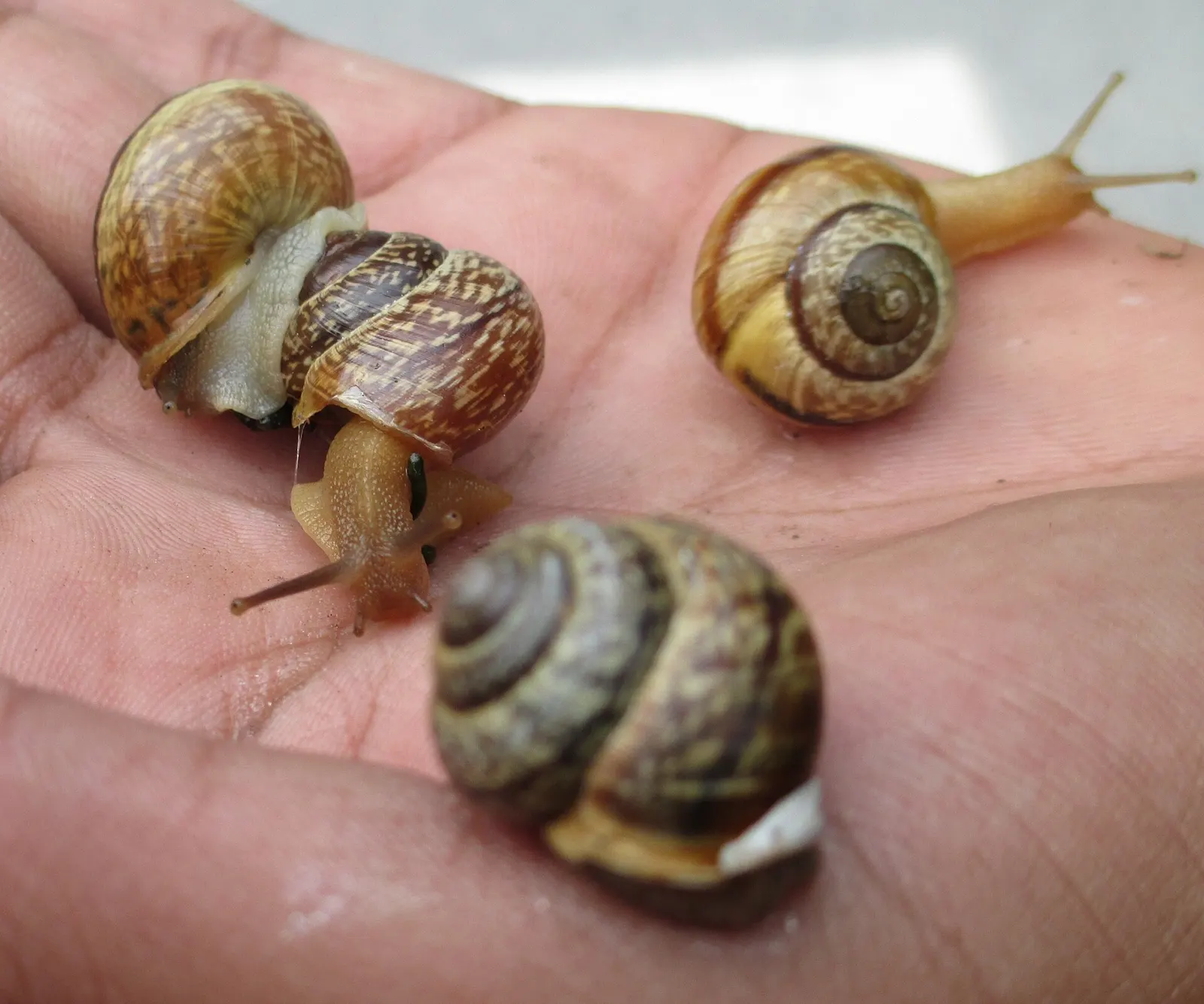
Most snail mucin in skincare comes from the common garden snail, Cornu aspersum (you may also see its older name, Helix aspersa). Some brands use the giant African land snail or other farmed species. That matters a little, because researchers have found that mucus composition varies between species and even between batches (McDermott et al., 2021Human study A review of what snail mucus is made of, why snails make it, and how researchers hope to use it in medicine and materials.Caveat: Notes that snail mucus varies a lot between species and even between batches.).
Snail mucin is mostly water plus a mix of moisturizing and soothing compounds
Snail mucin is mostly water. The rest is a complex mix, which is part of its appeal: instead of one active molecule, you get a cocktail of ingredients that all point in the same direction.
- Mucins and glycoproteins: large sugar-coated proteins that make slime stretchy and form a light film on skin that slows water loss.
- Long sugar molecules that bind lots of water. Hyaluronic acid is the best-known one, and snail mucin contains several.Glossary →, including hyaluronic acid: water-binding molecules that keep skin plump and bouncy. (Curious how it compares to straight hyaluronic acid? See snail mucin vs hyaluronic acid.)
- A soothing, skin-softening compound found in snail mucin and comfrey, and widely used in sensitive-skin products.Glossary →: a well-known soothing ingredient also found in comfrey and many sensitive-skin creams.
- Glycolic acid: a gentle exfoliating acid, though usually in amounts far too small to act like a real exfoliant.
- Peptides and antioxidant enzymes: lab studies found antioxidant activity and signs that snail secretion encourages the skin cells that build collagen (Brieva et al., 2008Lab / animal Snail secretion showed antioxidant enzyme activity and encouraged skin cells called fibroblasts to multiply and build the scaffolding that keeps skin firm.Caveat: Cells in a dish, not people.).
One surprising finding: an Italian research team that analysed purified garden-snail mucus found only small amounts of glycolic acid and allantoin, the two ingredients most marketing focuses on (Trapella et al., 2018Lab / animal Purified garden-snail mucus was not toxic to skin cells, protected them from dying, and helped them multiply and move, which is what cells do when a wound closes.Caveat: Cells in a dish. Interestingly, the mucus contained only small amounts of glycolic acid and allantoin.). The benefits seem to come from the whole mix rather than one star ingredient.
Snail mucin went from folk remedy to K-beauty bestseller
People have put snails on their skin for a long time. Ancient Greek medical texts are often cited as recommending crushed snails for skin inflammation, and snail-based home remedies show up in European folk medicine for centuries.
The modern story starts in Chile. Snail farmers raising snails for the French escargot market reportedly noticed that small cuts on their hands healed quickly and their skin stayed soft. Chilean and Spanish companies turned the secretion into creams in the 1980s and 1990s, and a Spanish lab studied it for burns and radiation skin damage.
Korean brands then made snail mucin famous. Products like the COSRX Advanced Snail 96 Mucin Power Essence went viral on social media, and today it is one of the most searched skincare ingredients in the US.
Snail mucin mainly hydrates, soothes and supports the skin barrier
Here is the honest summary of what snail mucin can do, based on the available evidence:
- Hydration. This is the most reliable benefit. Snail mucin draws water into the top layer of skin and its film helps keep it there. Most people notice softer, plumper, more comfortable skin within days.
- Barrier support. In a three-month trial, women using a snail-based routine lost less water through their skin than those using a placebo (Lim et al., 2020Human study 50 women aged 45 to 65 used a snail secretion and snail egg extract routine or a placebo routine for three months. The snail group lost less water through the skin and saw better roughness, firmness and elasticity scores.Caveat: Both groups improved on wrinkles; the study was partly run by the ingredient maker (Cantabria Labs).).
- Calming. Its soothing compounds make it popular after sun exposure, shaving, or harsher treatments like retinoids.
- Fine lines and texture. Two small controlled trials reported modest improvements over 8 to 12 weeks. That is real, but it is not the dramatic change before-and-after photos suggest.
Read the details in our guide to snail mucin benefits, or go straight to what the research actually says.
Snail mucin comes in essences, serums, creams, masks and mists
Because snail mucin is a thin gel, it is easy to put into almost any product type:
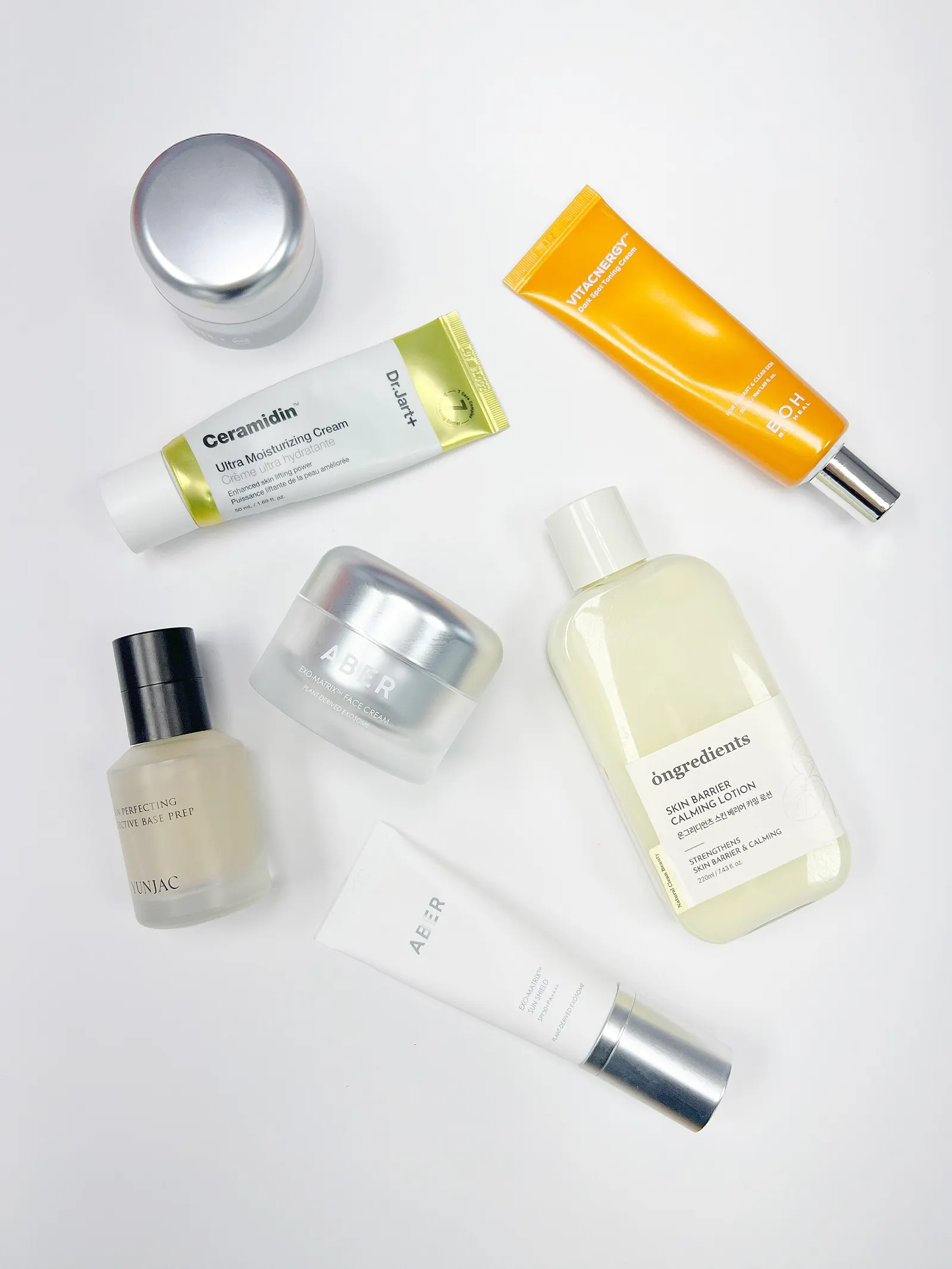
- Essences (like COSRX Advanced Snail 96): the most popular format, applied after cleansing and toner.
- Serums: often combine snail mucin with other actives like niacinamide or peptides.
- Creams and moisturizers: see our guide to snail creams.
- Sheet masks and eye patches: a concentrated, occasional treat.
- Mists and sprays: lighter formulas you can spray over makeup. We cover these in snail mucin sprays and mists.
Snail mucin is safe for most people, with a few exceptions
Snail mucin is one of the gentler popular ingredients, but nothing works for everyone. The main things to know:
- Allergies: people allergic to house dust mites or shellfish may react, because some snail proteins resemble mite proteins (Guilloux et al., 1998Lab / animal Showed that the immune system of some people allergic to house dust mites also reacts to proteins from land snails.Caveat: About eating snails and lab antibodies, not skincare, but it is why people with mite allergies are told to patch test.). Patch test first.
- Breakouts: snail mucin itself is not known to clog pores, but some formulas contain extra ingredients that may not suit acne-prone skin.
- Ethics: it is an animal product. Collection does not require killing snails, but how humanely it is done depends on the supplier.
We go deeper in snail mucin side effects and is snail mucin ethical?.
How to try snail mucin for the first time
Best-proven benefit
Hydration. Human trials measured less water loss. See the studies
When you'll see results
- 1 week softer, dewier
- 4 weeks smoother texture
- 12 weeks modest fine-line change
Before you start
7–10 days
Patch test on your inner arm, especially with a dust mite or shellfish allergy.
Side effects →Free tool
Build your snail mucin routine
5 questions, about a minute.
If you are curious, the easiest way to start is with a single essence or serum:
- Patch test on your inner arm twice a day for 7 to 10 days.
- Apply a pump to clean, slightly damp skin, after cleansing and toner.
- Follow with your usual moisturizer and, in the morning, sunscreen.
- Give it at least four weeks before deciding whether it works for you.
Our step-by-step guide on how to use snail mucin covers layering with retinol, vitamin C and acids, and our best snail mucin products roundup helps you pick a first bottle.
Frequently asked questions
Is snail mucin the same as snail slime?
Yes. Snail mucin, snail slime and snail mucus all describe the same substance. Skincare brands filter and purify it, which is why the ingredient list says snail secretion filtrate.
Is snail mucin snail sperm?
No. This is a viral myth. Snail mucin is the mucus snails secrete from their foot and skin as they move. It has nothing to do with reproduction. A few products use snail egg extract, which is a different, much rarer ingredient.
What does snail secretion filtrate mean on a label?
It is the standardized ingredient name (INCI name) for purified snail mucin. If it appears first on the list, it is the main ingredient in the formula.
Do Koreans actually use snail mucin?
Yes. Snail mucin has been a staple of Korean skincare since the late 2000s, and Korean brands such as COSRX, Mizon and Benton made it famous worldwide. The ingredient itself was first commercialised in Chile in the 1980s and 1990s.
Is snail mucin vegan?
No. It is an animal-derived ingredient, although collecting it does not require killing snails. Vegans can use plant-based alternatives often sold as phyto-mucin.
Studies cited
- McDermott M, Cerullo AR, Parziale J, et al.. Advancing Discovery of Snail Mucins Function and Application. Frontiers in Bioengineering and Biotechnology. 2021;9:734023. PubMed ID 34708024.
- Brieva A, Philips N, Tejedor R, et al.. Molecular basis for the regenerative properties of a secretion of the mollusk Cryptomphalus aspersa. Skin Pharmacology and Physiology. 2008;21(1):15-22. PubMed ID 17912020.
- Trapella C, Rizzo R, Gallo S, et al.. HelixComplex snail mucus exhibits pro-survival, proliferative and pro-migration effects on mammalian fibroblasts. Scientific Reports. 2018;8:17665. PubMed ID 30518946.
- Lim VZ, Yong AA, Tan WPM, Zhao X, Vitale M, Goh CL. Efficacy and Safety of a New Cosmeceutical Regimen Based on the Combination of Snail Secretion Filtrate and Snail Egg Extract to Improve Signs of Skin Aging. Journal of Clinical and Aesthetic Dermatology. 2020;13(3):31-36. PubMed ID 32308795.
- Guilloux L, Vuitton DA, Delbourg M, et al.. Cross-reactivity between terrestrial snails (Helix species) and house-dust mite (Dermatophagoides pteronyssinus). II. In vitro study. Allergy. 1998;53(2):151-158. PubMed ID 9534913.
Update history
- : First published.
We review this guide when new research or product changes come out. Spotted something out of date? Email support@snailmucinspray.com.
This guide is general information, not medical advice. If you have a skin condition, an allergy, are pregnant, or use prescription skincare, check with a dermatologist first.